The Information Lab
Project Overview:
The Trust Deficit – Identifying a Business Barrier
The Information Lab is a B2B data visualization company specializing in Tableau and Alteryx consulting. While their mission is to help clients across finance, healthcare, and real estate make sense of data, their existing website suffered from a critical lack of trust and lead-generation capability.
Our team was tasked with leveraging user-centered design principles to create a more credible and effective website that aligns with TIL's brand authority and business objectives.
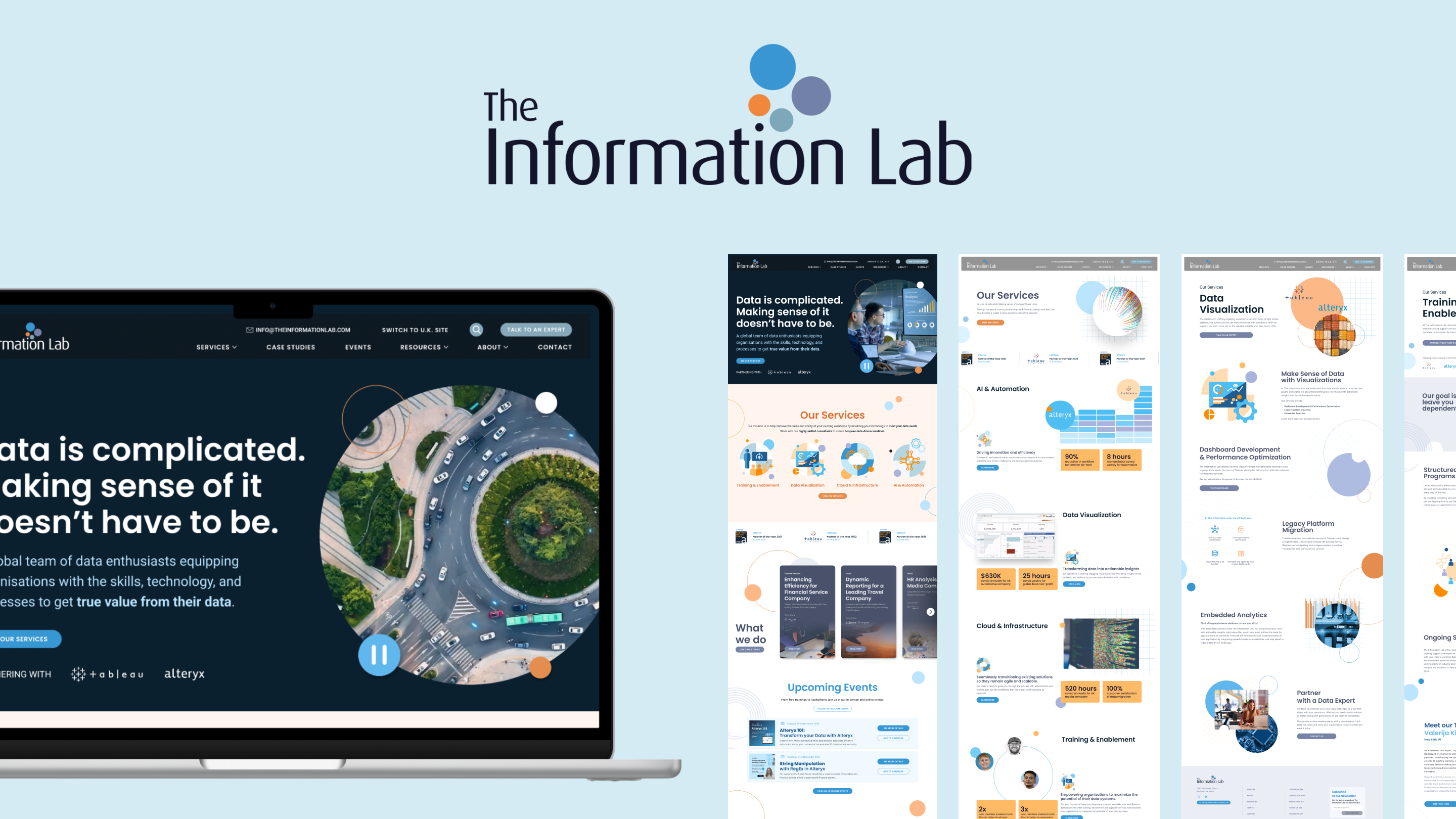
Goal: To redesign The Information Lab's website to enhance its credibility and significantly drive lead generation among target decision-makers.
Defining the Challenge:
Uncovering the Credibility Gap: Why Decision Makers Questioned TIL's Expertise
The Initial Assumption vs. The Reality
Our client initially suspected minor usability issues, but our preliminary heuristic evaluation quickly pointed to a deeper, more systemic problem tied directly to trust. The main challenge was to determine what prevented high-value B2B users (Decision Makers and Analysts) from converting into qualified leads.
Validate the Problems, Quantify the Opportunity
We began our research stage by conducting qualitative research that could uncover the emotional and trust-based barriers to conversion.
- Heuristic Evaluation & Kickoff: We began by systematically identifying pain points and violations across the site, establishing a shared baseline with the client.
- External User Interviews (6 Users): We focused on interviewing users fitting TIL's target personas (Decision Makers and Analysts) to validate or disprove our initial findings and capture direct quotes regarding trust and credibility.
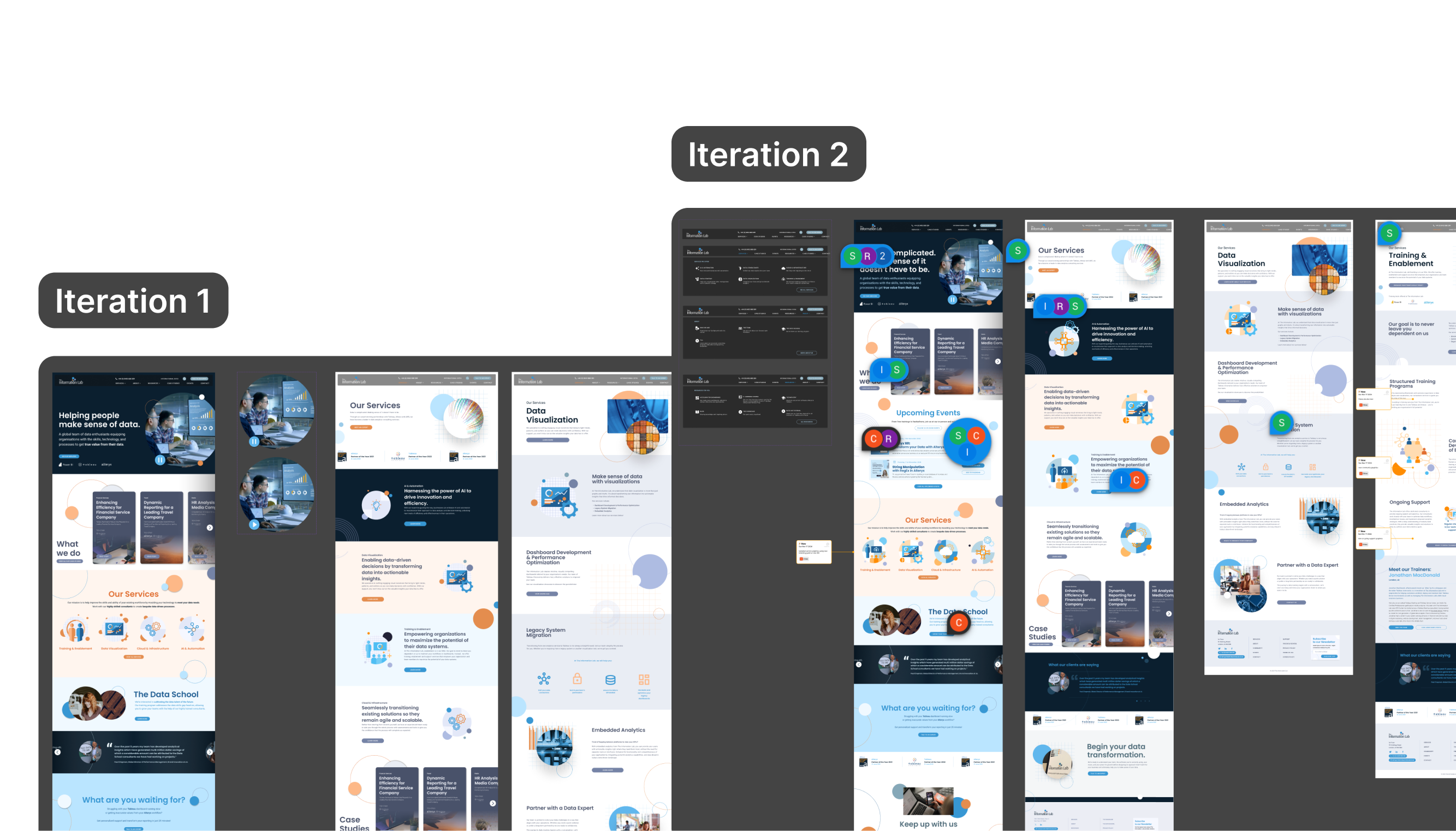
- Internal Stakeholder Validation (6 Employees): We interviewed internal employees (Account Executives, Marketing) to cross-reference external pain points with internal knowledge and test early prototype iterations due to budget constraints on A/B testing.
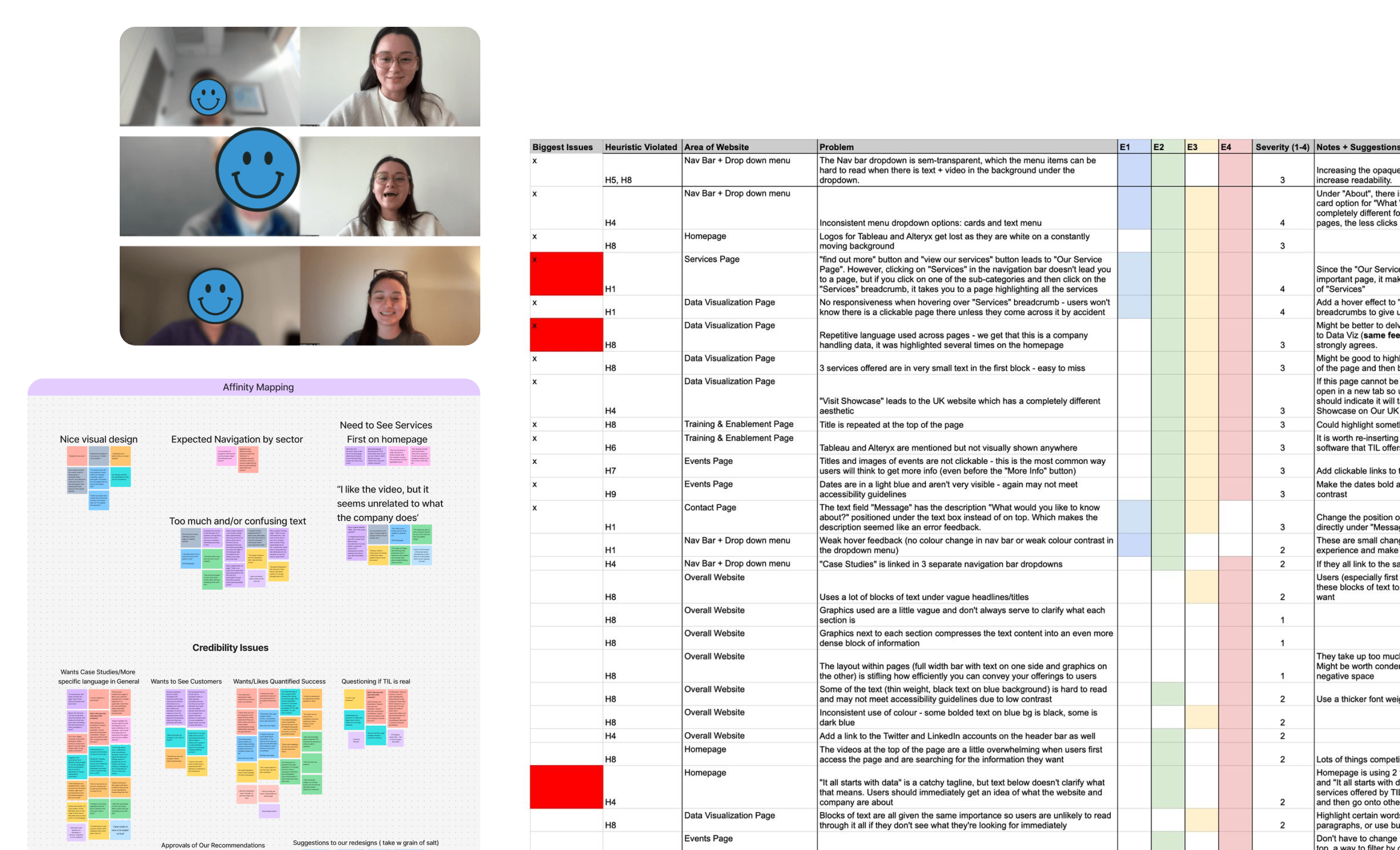
External interviews & internal stakeholder validation, heuristic evalution, and affinity mapping
Research - Problem Pillars Identified:
User-Centered Research: Shifting Focus from SEO to Social Proof
The Most Critical Finding:
"I haven't seen anything that shows that it's a real company."
During user interviews, 50% of decision-maker participants shared a core sentiment that the website lacked the concrete evidence necessary to prove TIL was a trustworthy or "real" company in the US market. This profound credibility gap was the central problem we needed to solve.
Lack of Specific Social Proof
Evidence: 7/12 Users (external/internal) stated the homepage offered zero "real" proof of work, making services feel vague and undeliverable.
Impact: Decision-makers lacked confidence to initiate contact, assuming high-risk or low-impact engagement.
Missing Quantifiable Success Metrics
Evidence: 7/12 Users noted the complete absence of data/KPIs, like "% revenue increase" or "time saved," on service pages and case studies.
Impact: The lack of evidence prevented users from connecting TIL’s service to tangible ROI, stalling the decision process.
Dense and Undigested Language
Evidence: 8/12 Users described the website language as overly dense, vague, and jargon-heavy, leading to confusion rather than curiosity.
Impact: Users quickly lost focus, abandoned key pages, and failed to internalize the core value proposition.
The Pivotal Learning: Prioritizing Evidence over Volume
The most crucial insight we gained was that the client’s current approach, which prioritized heavy text for SEO, was actively hurting the user experience by eroding trust. We learned that in B2B consulting, a single, clear testimonial with quantifiable results is exponentially more valuable than three pages of vague, dense text. This realization fundamentally shifted our design focus toward immediate, specific proof points.
Solution - Designing for Trust:
Three Pillars to Reclaiming Credibility
From Insight to Intervention: The Design Recommendations
Based on our validated research, we developed three high-impact design recommendations to directly address the credibility gaps discovered in the user interviews.
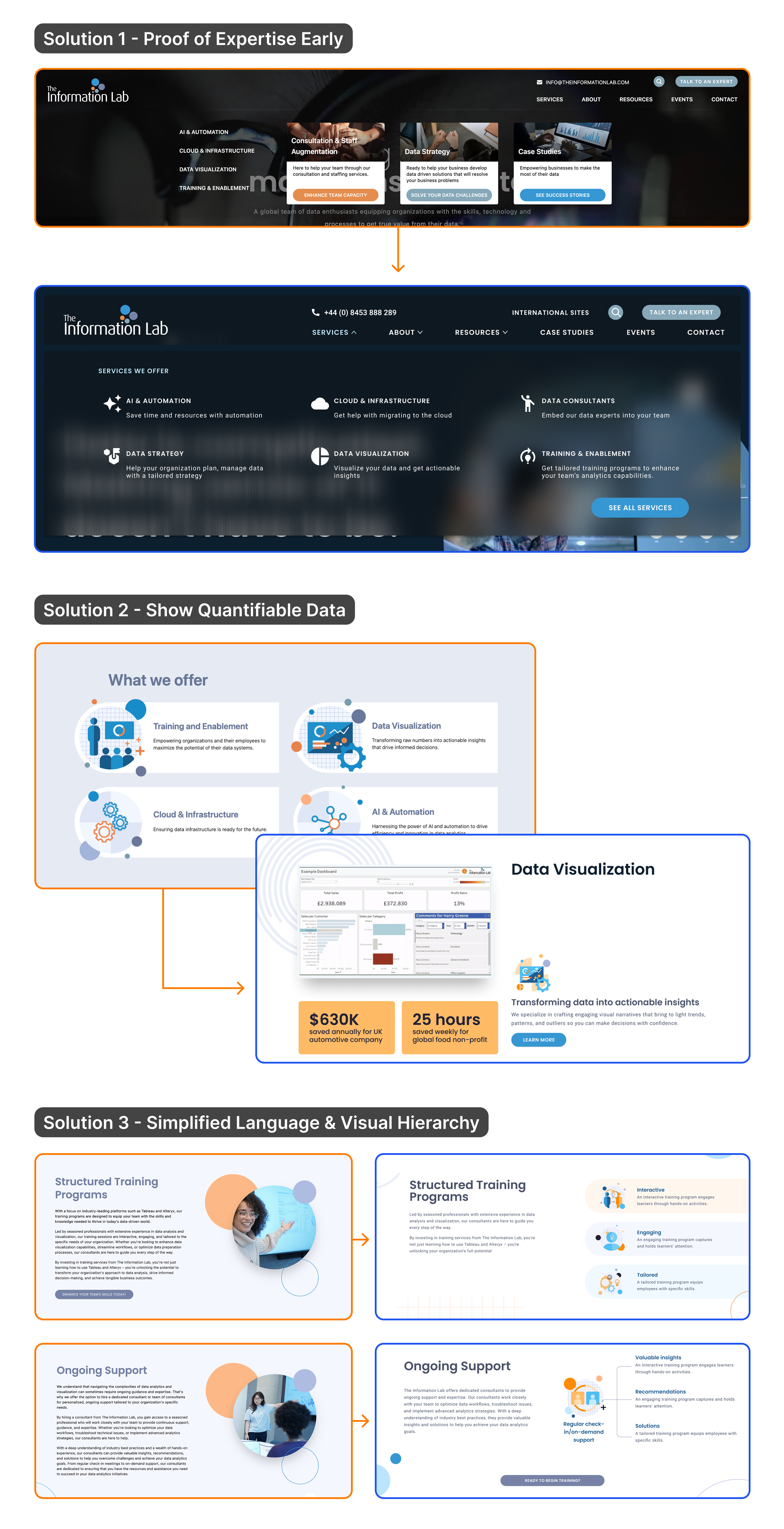
Build Trust By Sharing Specific Proof of Expertise Early
Implementation & Impact: We introduced a "Welcome with Proof" module immediately after the hero section, featuring rotating, specific client logos and a brief, impactful success statement to preemptively overcome the "fake company" perception.
This change ensures users immediately encounter social proof, establishing trust before they dive deeper.
Show Quantifiable Data, Not Just Process
Implementation & Impact: We redesigned the services pages to include dedicated "Impact Metrics" modules adjacent to the service description, ensuring every value statement was backed by a KPI (e.g., “Reduced reporting time by 60%”).
This directly addresses the need for tangible ROI, enabling decision-makers to justify the investment internally.
Use Simplified Language and Visual Hierarchy
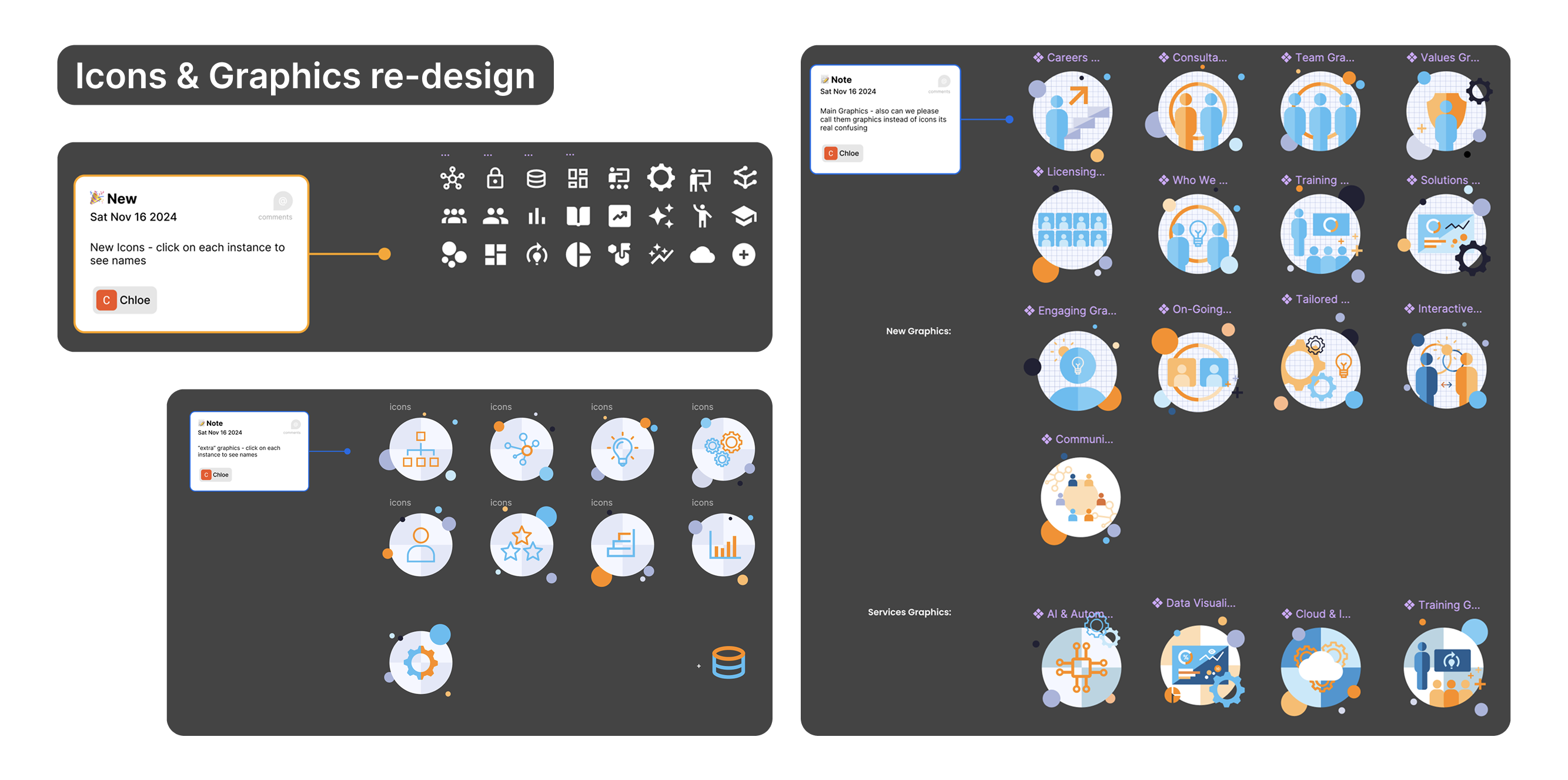
Implementation & Impact: We reduced the overall word count by 40%, restructured long paragraphs into digestible bullet points, and utilized clear iconography to simplify complex data concepts.
This improved readability and reduced cognitive load, ensuring users felt more confident and less confused about TIL’s offerings.
Conclusion:
Outcome and Validation
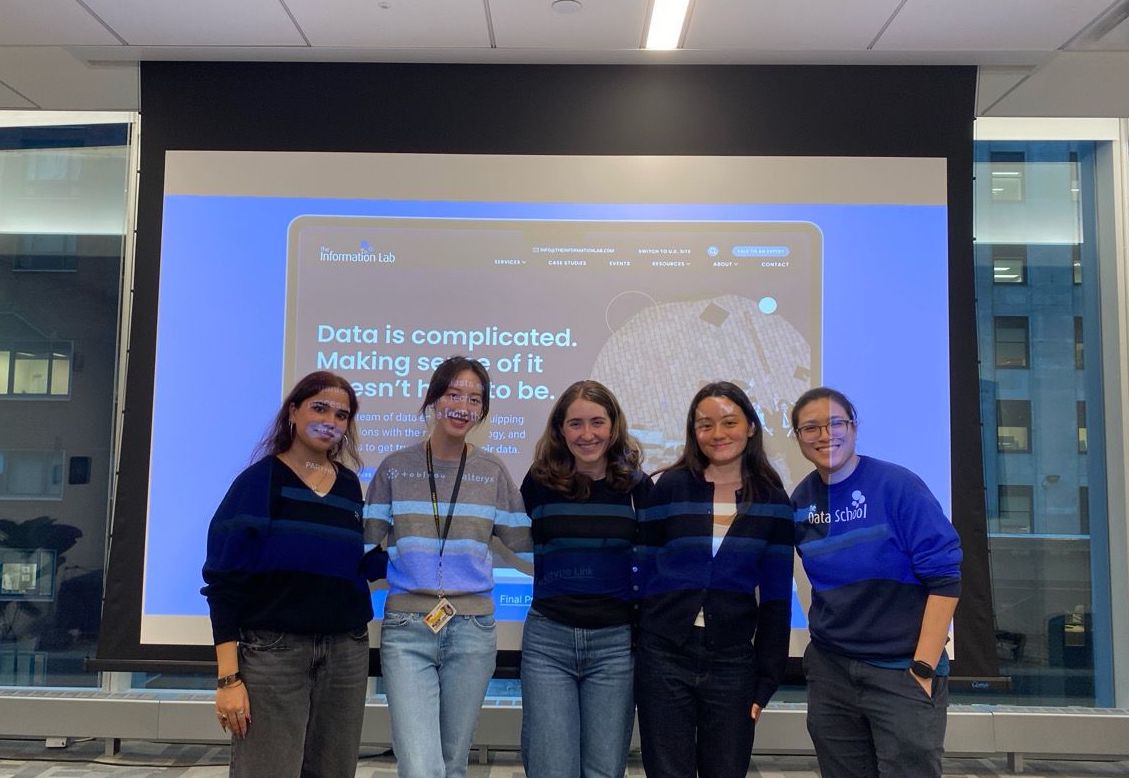
The new prototype design was validated through a final round of feedback sessions with our interview participants (internal and external).
- Positive Preference: 10 out of 12 users expressed a strong preference for the redesign, specifically citing the clarity of the language and the immediate presence of tangible proof as key improvements.
- Clearer Direction: The internal TIL team gained a clear, data-backed roadmap on which US-specific content needed to be prioritized and where to showcase their existing B2B success stories more effectively.
Reflections and Internalized Lessons
The Power of External Critique: What I Learned: Never underestimate the gap between internal perception and external reality. A company deeply familiar with its brand can overlook fundamental trust barriers that an external decision-maker immediately flags. Our external user interviews were critical in surfacing the core, unspoken barrier to conversion.
The B2B Language Imperative: What I Learned: In the B2B context, content should be treated as a conversion tool, not just an SEO tool. We must design for the user who is short on time and requires immediate, quantifiable justification. The lesson here is that clarity and proof always trump keyword density.
Next Steps for TIL: The next phase would involve A/B testing the revised homepage proof module against the original design, focusing on measuring click-through rates on CTAs and lead submission form completion rates.