National Gallery of Art
Project Overview:
Engaging Gen Z: Co-Designing a Playful Digital Museum Experience for the NGA
This project details how we partnered with the National Gallery of Art (NGA) to create a mobile-first digital experience aimed at building a lasting, trusting relationship with Gen Z audiences by leveraging their desire for fun, social connection, and cultural expression. The goal was to establish the NGA as a forward-thinking institution that meets younger audiences where they are digitally.
The Challenge:
The Digital Divide – Why Gen Z Wasn't Staying
The core challenge was transforming the NGA's online presence to appeal to a young audience that primarily uses museum websites for seeking specific information, not for general exploration. We needed to address how to draw and retain more Gen Z audiences to the NGA's online presence, keep "fun seeker" archetypes engaged, and balance playful design with the mission of a trusted cultural institution.
Defining the Gap
Gen Z is social, curious, and culturally expressive, and NGA needed a platform that aligned with these behaviors.
So we asked ourselves,
"How might we draw and retain more Gen Z audiences to the National Gallery of Art's online presence?"
"How might we keep "fun seeker" archetypes engaged with what the National Gallery of Art is doing?"
"How might we balance "fun" with NGA's mission of being a trusted cultural institution?"
Our Investigative Approach:
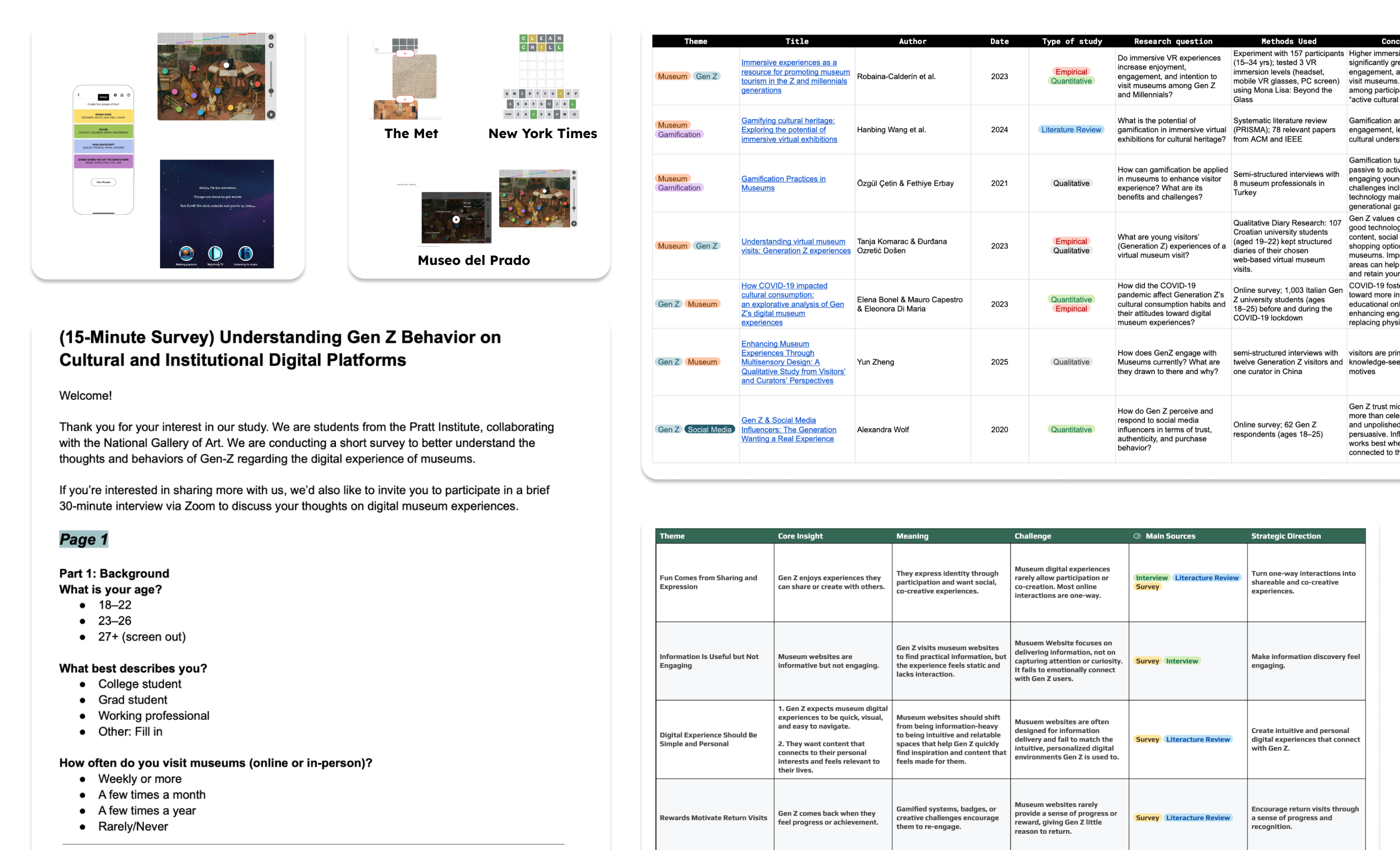
To help us answer the above questions, we used four research methods.
- Generative Interviews: Conducted with five Gen Z museum visitors and one museum professional.
- Competitive Analysis: Examined other institutions (The Met, Museo del Prado) and companies (New York Times) engaging Gen Z in game-like ways.
- Survey: Gathered information from Gen Z people who visit museums.
- Desk Research: Reviewed articles on Gen Z and Museums.
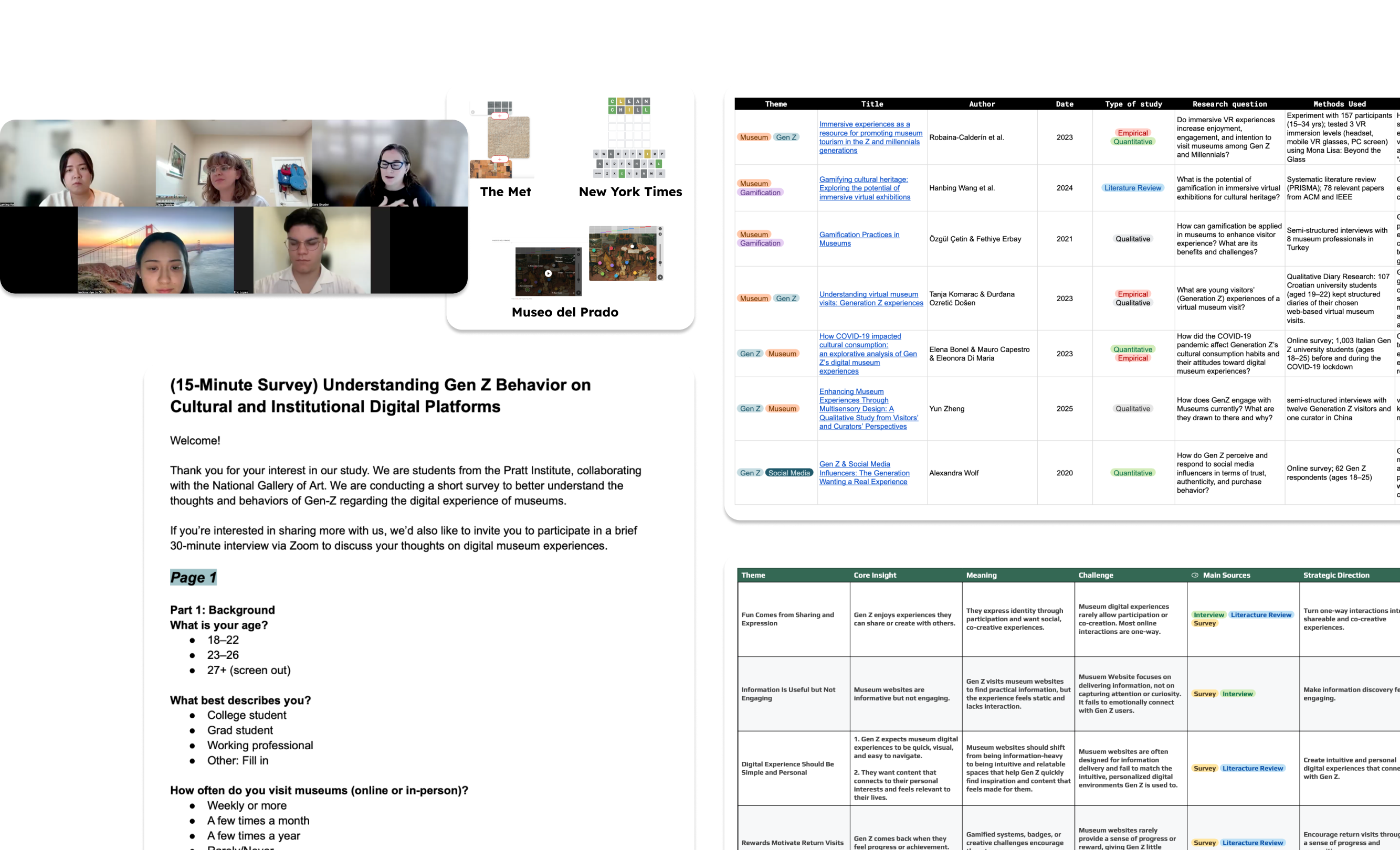
Team Members: Lanting Ko, Claire Paisley, Isadora Oh, Eric Lopez interviewing Industry Professional Sara Snyder from Smithsonian Institution
Key Learnings that Redefined the Problem:
Fun is a Social Tool: Gen Z finds fun in connection; they share content to laugh or discuss together. Digital museum content must be inherently social and shareable.
Utility vs. Exploration: Gen Z tends to use museum websites mainly to find specific information, rather than for general exploration. This highlighted the need for the experience to be intrinsically engaging.
Meet Them Where They Are: We were advised against expecting people to willingly navigate to a dedicated website, suggesting the need to "hang out in the places where people already are spending time".
Pivoting from Education to Co-Creation:
Meeting Gen Z Where They Are
Our strategy was centered on two main directives: transforming one-way museum interactions into shareable, co-creative experiences and making information discovery feel engaging. We realized that success meant moving beyond simple quizzes or riddles and embedding social play directly into the art experience.
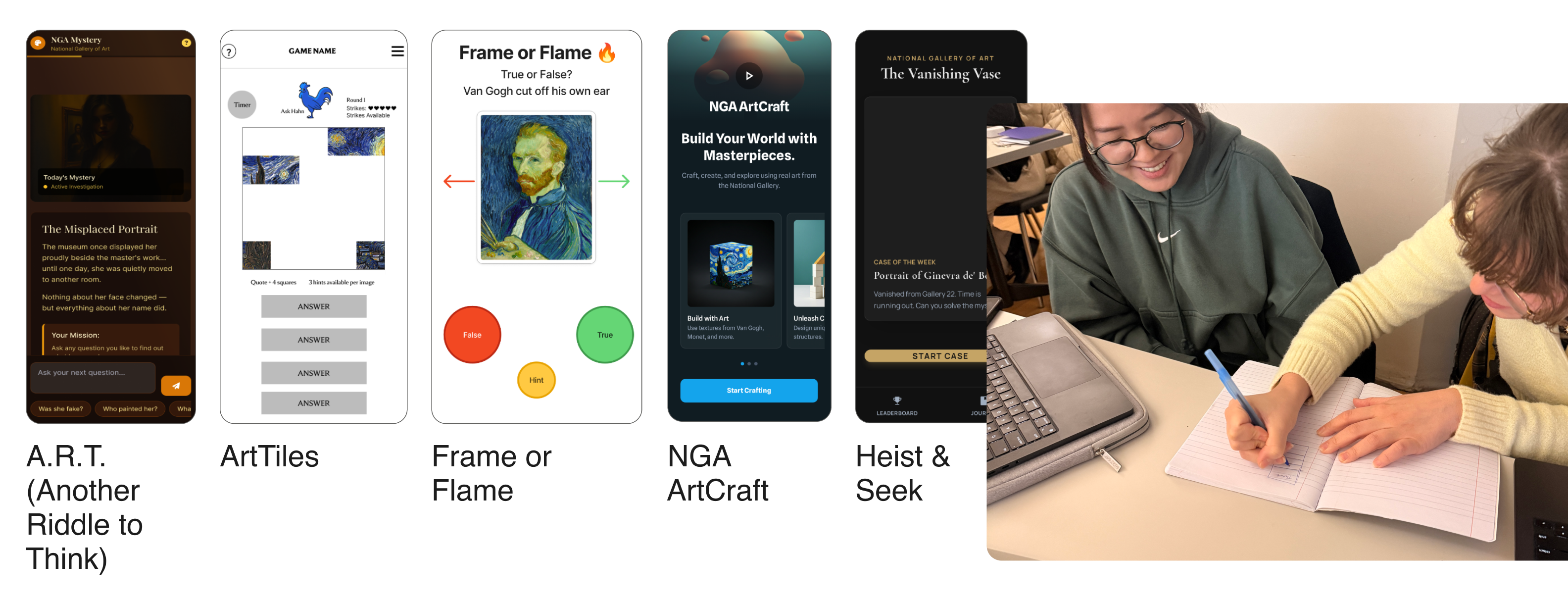
The Conceptual Leap: We started with several low-stakes ideas,
- A.R.T. (Another Riddle to Think): Players collaboratively decode a mysterious story by asking the host/system questions that can only be answered with "Yes," "No," or "Doesn't matter" to gather clues and discover the truth.
- ArtTiles: This is a guessing game where players race against a timer and limited lives to identify an artwork revealed partially behind a 5x5 grid of tiles from a set of four options.
- Frame or Flame: Users are presented with five true or false questions about an artist or artwork, swiping after each to reveal the correct fact, and can share their results with friends as an emoji-based hint.
- NGA ArtCraft: Users "craft their own space" using drag, stamp, and remix tools with textures sampled directly from NGA artworks, with each element linked back to its source artwork for exploration.
- Heist & Seek: Players explore stylized museum rooms to solve puzzles, decode hidden clues, and complete mini-games to track down a virtual artifact, earning ranks and sharing their journey in a "detective journal."
but these lacked the instant, competitive, social dynamic Gen Z craves. Our breakthrough was the pivot to "Art or Fart," a concept that directly mimics Gen Z's participation in fast-moving digital trends, instantly transforming art appreciation into a competitive, community-focused game. This allowed the NGA to facilitate a community moment rather than just providing information.
Solution:
Transforming Learning into Play
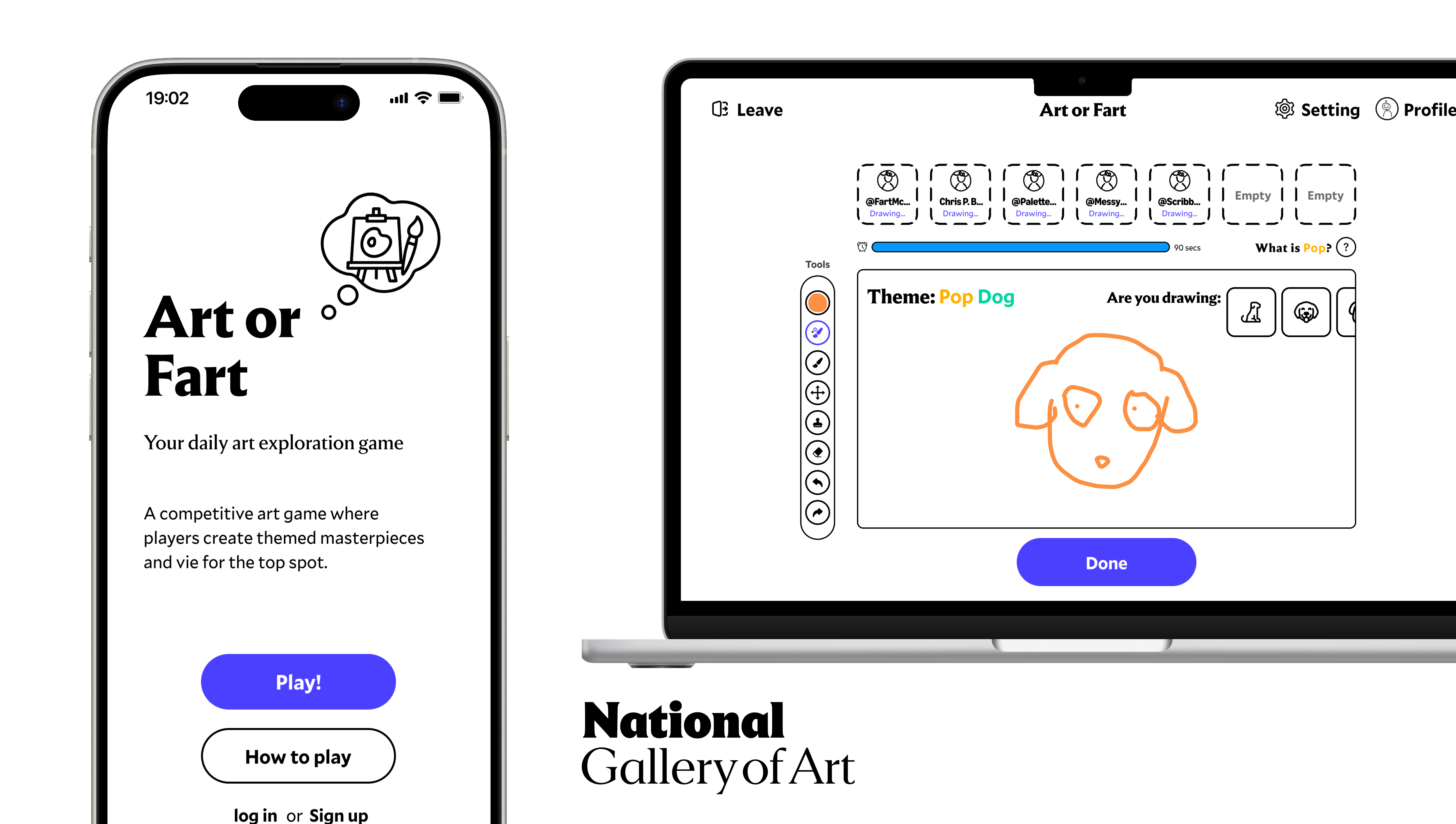
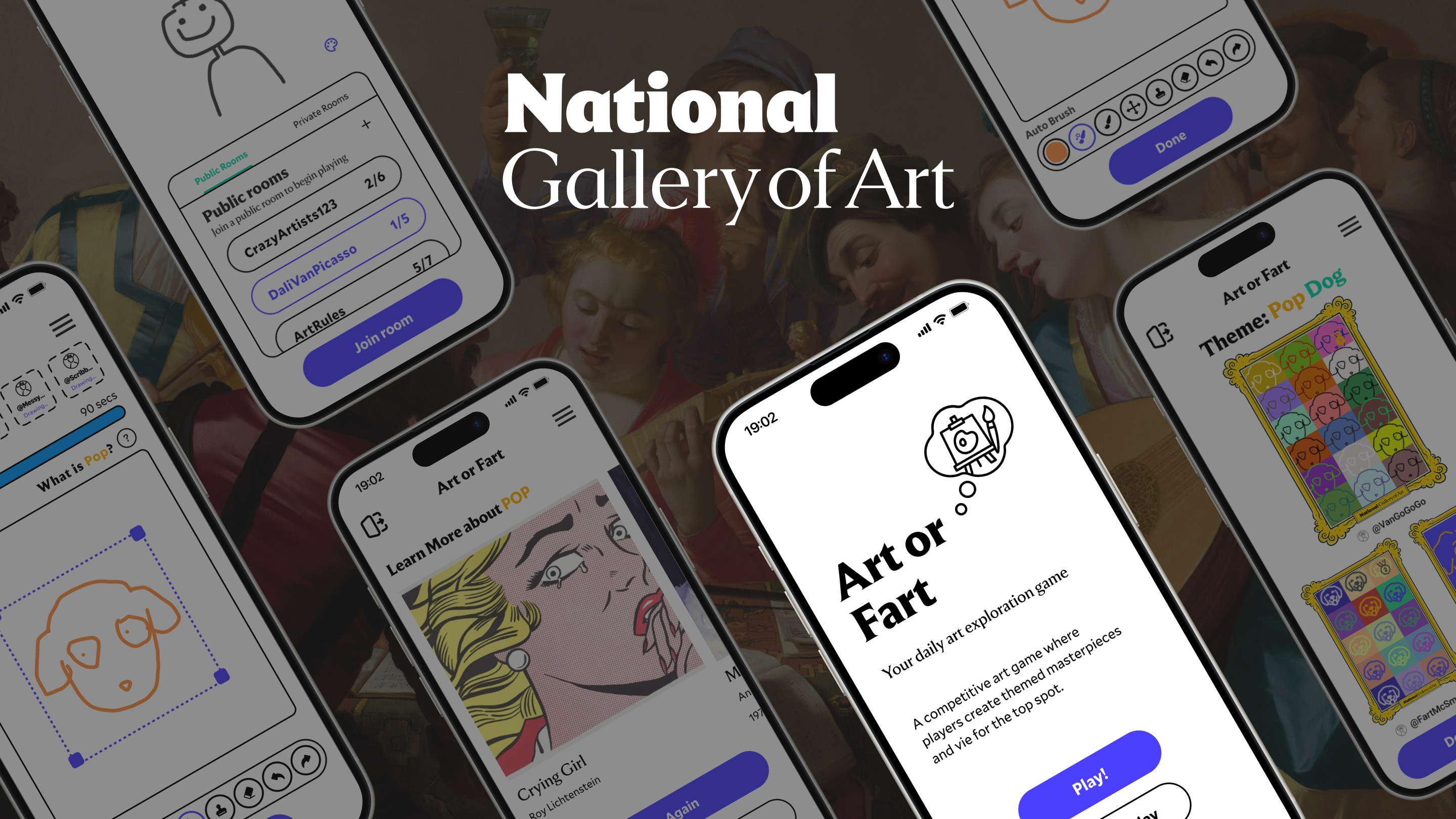
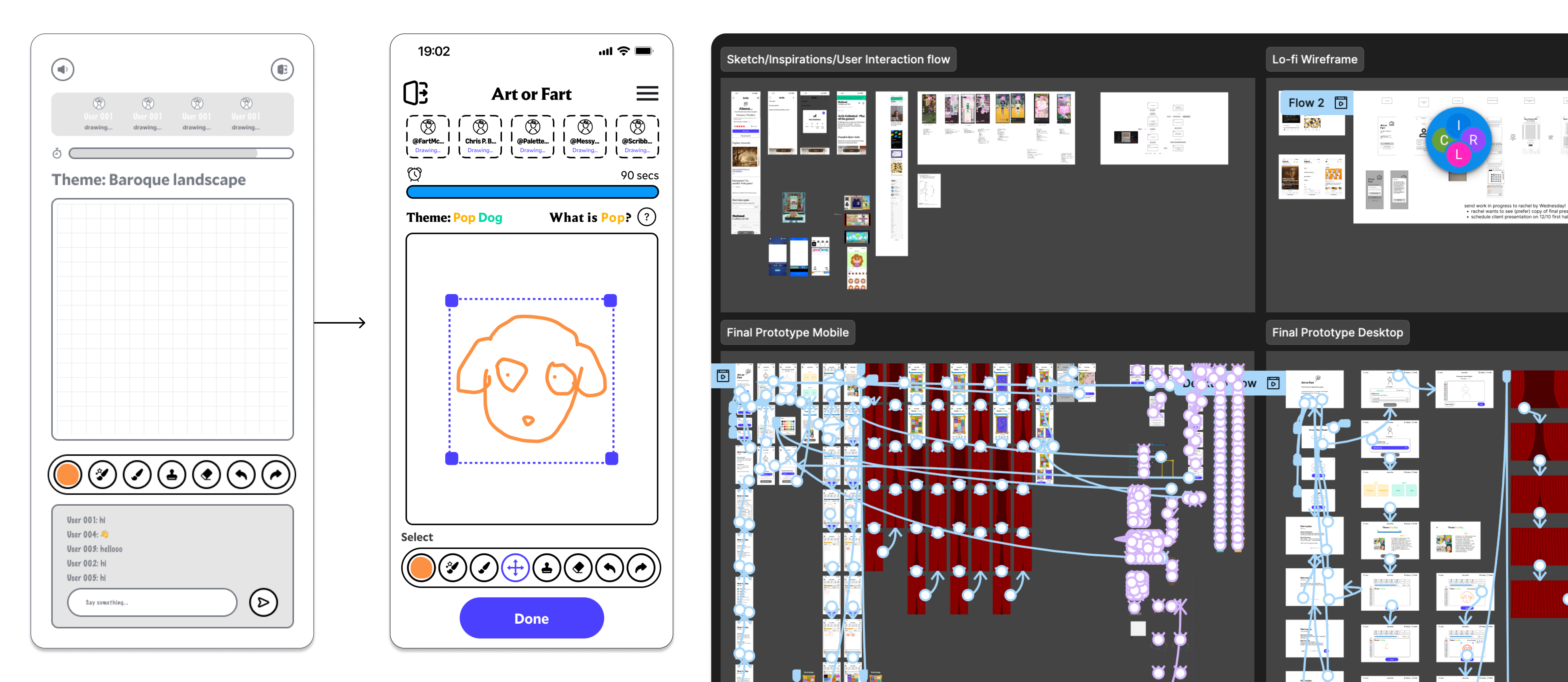
The final design is "Art or Fart," a competitive, multiplayer, timed, weekly art challenge game where players use themed palettes and tools inspired by current exhibits to paint to a prompt, then vote on each other's creations in a runway-style feed to climb a weekly leaderboard.
Every feature in our solution was a direct response to a research-driven insight. Encountering specific design obstacles ultimately allowed us to gain pivotal learning points that were integral to finalizing the design.
Difficulty of Mobile Drawing
Solution: Integrated an AI drawing tool (Auto Brush) that suggests options for the user.
Learning Point: Directly addressed user concerns about the limitations of drawing complex shapes with a finger on a small screen, making the tool feel assistive rather than frustrating.
Institutional Voice Control
Solution: Replaced the open text chat function with a Reactions button (like thumbs-up, heart, etc.).
Learning Point: This was a crucial move to align with NGA's guidelines for a conservative, trusted environment while still allowing users necessary fun, social self-expression.
Encouraging Replayability
Solution: Created a carousal style theme selector combining art style and object (e.g., Pop Dog).
Learning Point: This provided a more extensive, dynamic theme library than simple voting and created a built-in learning opportunity to explain the art style, linking back to the NGA's collection.
The Final Solution:
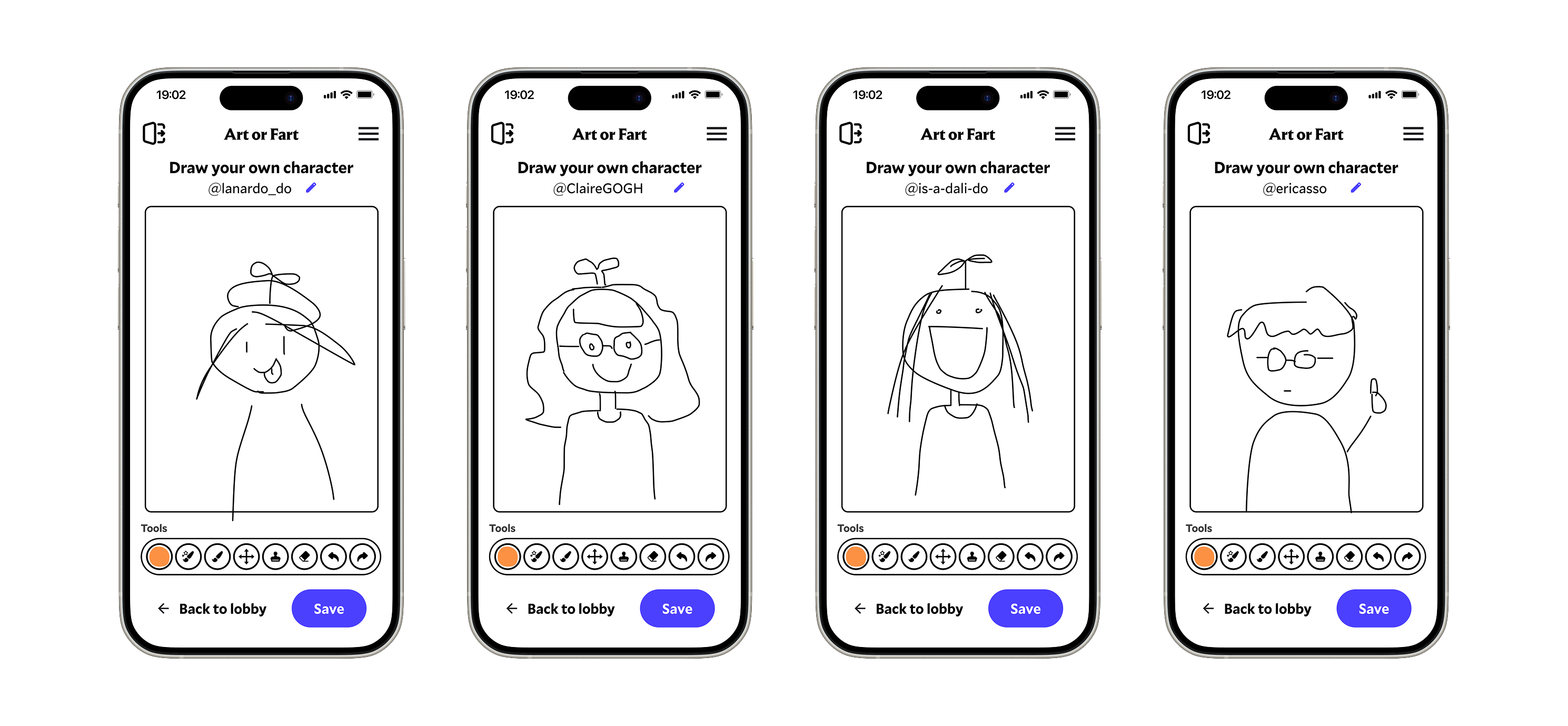
"Art or Fart" - A Co-Creative Art Game
Solution Overview: The "Art or Fart" solution provides a playful, competitive bridge to Gen Z, successfully translating museum content into engaging, shareable experiences.
Key Takeaway & Validation:The primary learning was balancing the NGA's institutional integrity with Gen Z's desire for social self-expression. Pivoting to the Reactions feature and the AI Drawing Tool addressed this balance directly. The NGA clients were excited about the concept's feasibility, with one noting,
"A lot of this is familiar to our developers into our site... I can see this easily fitting in to our portfolio of products."
Next Steps: Future work will focus on developing a full working prototype, expanding the catalogue of themes, and integrating the "Learn More" function to directly link the game activity back to NGA collections for continuous educational value.